Symmetrical Triangle: Signal or Noise?
A symmetrical triangle is the weakest of the three triangle patterns. It forms when price swings narrow between two converging lines, one descending from the highs and one ascending from the lows, creating a coil that ends in a breakout or breakdown.
What forms the pattern
Price alternates between lower highs and higher lows, each swing smaller than the last. The upper line slopes down from successive peaks; the lower line slopes up from successive troughs. Both lines must be touched at least five times in total, and the interior of the triangle should contain price action rather than empty space.
What confirms the pattern
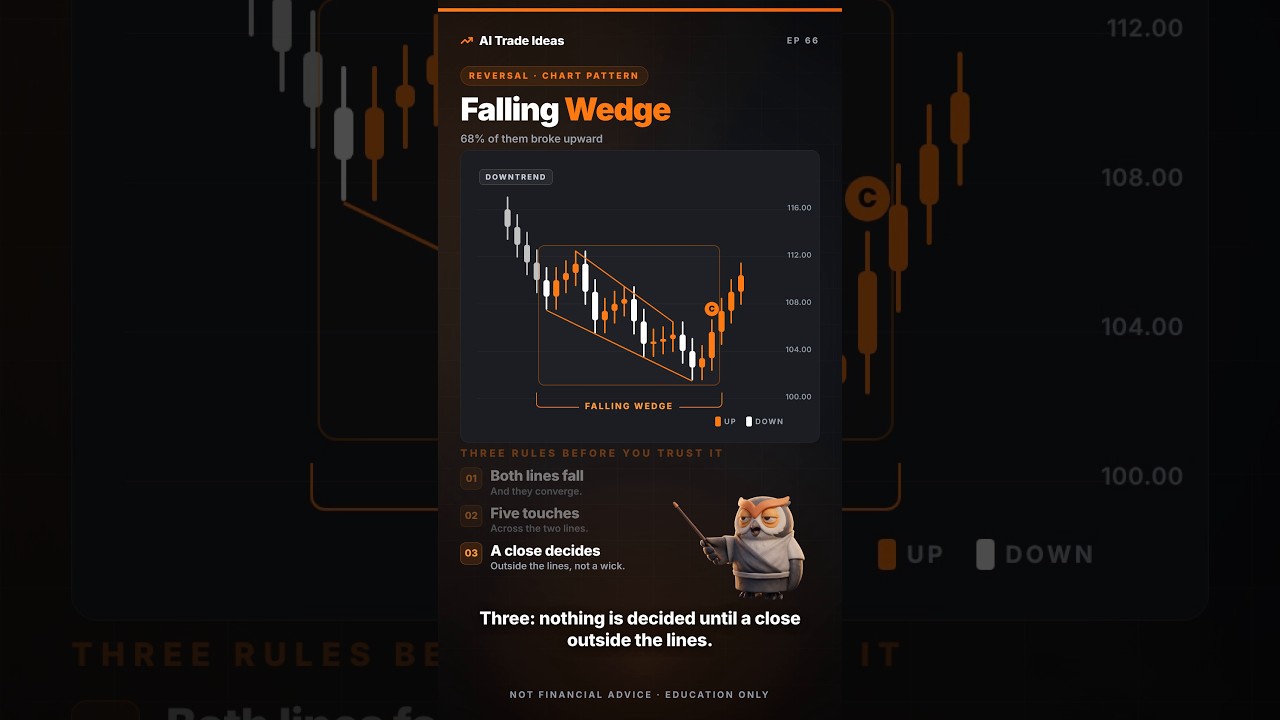
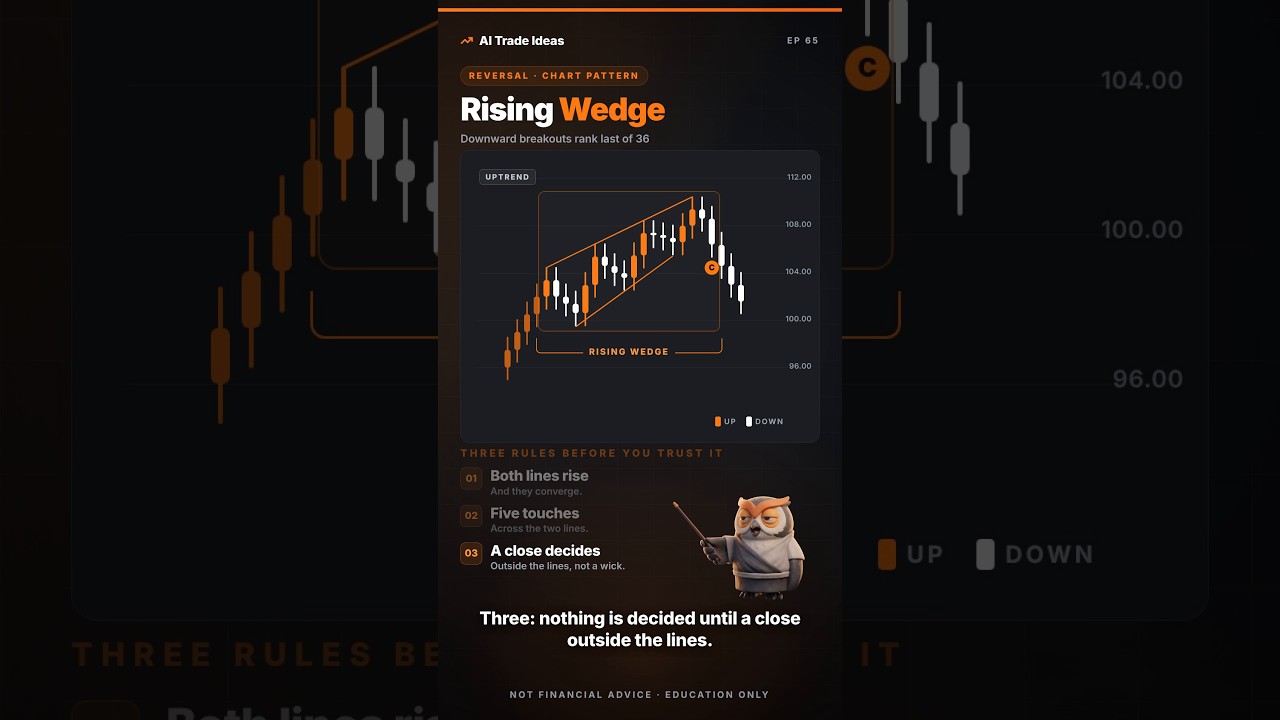
A decisive close outside either boundary line serves as confirmation. Until that close occurs, the pattern remains unresolved. The direction of the breakout is not known in advance; the close itself supplies the signal.
How the pattern fails
Treating the tightening range, or squeeze, as a high-probability setup leads to the most common error. Because the symmetrical triangle is the weakest of the three triangles, many of these coils resolve with false breaks or simply drift sideways until one side finally gives way. Without five touches, without price filling the triangle, or without a confirming close, the pattern is disregarded.