Mastering the Trade Log: How to Use Your Trading Journal as a High-Performance Edge
A trading journal is far more than just a list of wins and losses; it is a professional-grade "diary" designed to bridge the gap between random results and consistent execution. By systematically recording every decision, you turn raw data into a map of your own trading psychology, helping you eliminate emotional blind spots and refine your edge.
Mastering the Trade Log: How to Use Your Trading Journal as a High-Performance Edge
A trading journal is far more than just a list of wins and losses; it is a professional-grade "diary" designed to bridge the gap between random results and consistent execution. By systematically recording every decision, you turn raw data into a map of your own trading psychology, helping you eliminate emotional blind spots and refine your edge.
Here is how to master the Journal Section to maximize your performance.
1. The Power of Performance Metrics (At-a-Glance)
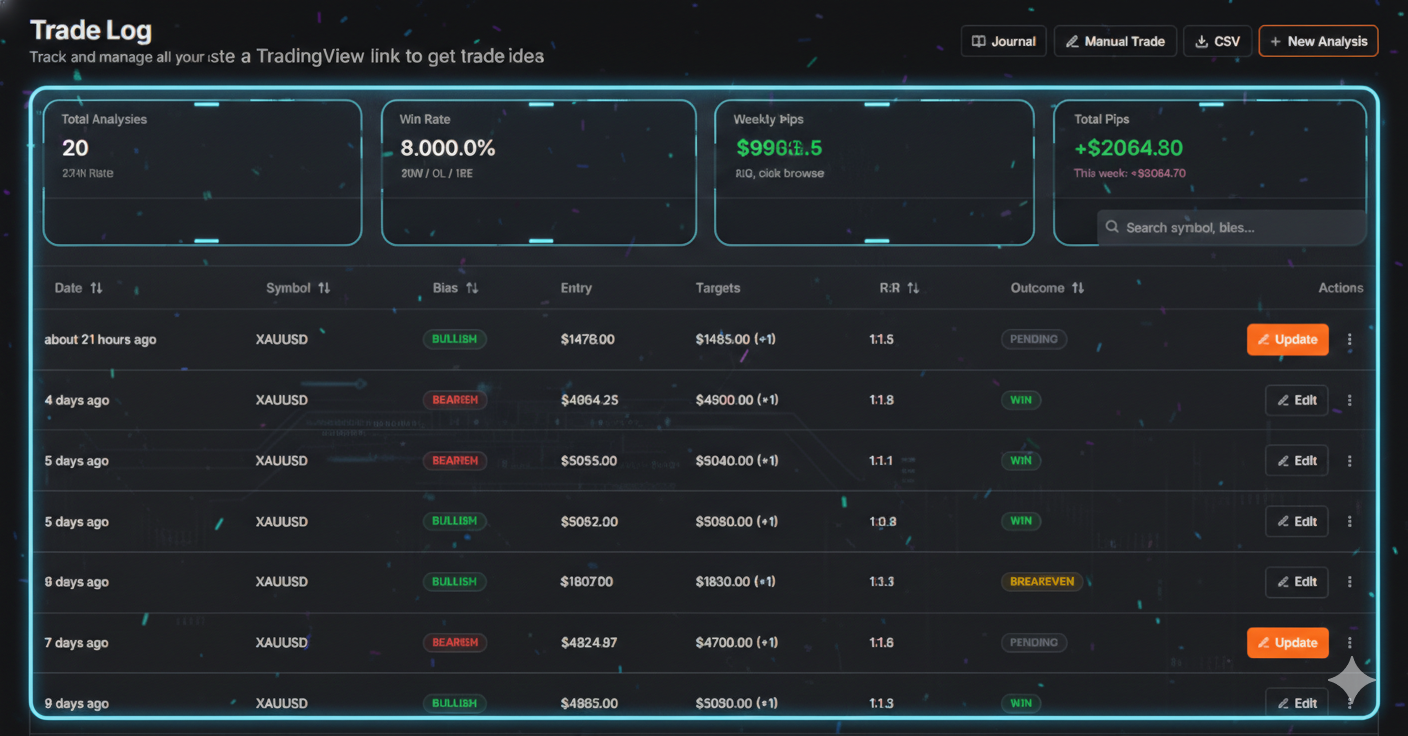
The top bar of your journal provides an immediate snapshot of your "statistical health." Understanding these numbers is the first step to scaling effectively:
Win Rate: This is the percentage of your trades that end in profit. While often prioritized, remember that a high win rate alone doesn't guarantee profitability—it must be balanced with your risk-to-reward ratio.
Net Profit: Your fundamental measure of success, representing total earnings after all commissions and fees.
Weekly Pips: A common metric for Forex and Commodities (like XAUUSD) to track the magnitude of price movement captured.
Total Analyses: Tracks your sample size. Most professional systems require at least 20 trades to determine if a strategy has a true statistical edge.
2. Structuring Your Trade Logs
For every entry in your log, consistency is more important than complexity. Your Journal Section organizes the most critical data points for quick review:
Bias: Recording your initial outlook (Bullish or Bearish) helps you identify if you are better at trading "long" or "short" markets.
Entry & Targets: Documenting your exact entry point and planned exit levels (Take-Profit) allows you to assess your precision and whether you are exiting trades too early.
Risk-to-Reward (R:R): This is the cornerstone of long-term survival. A common goal is at least a 1:2 R:R, meaning for every $1 you risk, you aim to make $2.
Outcome Tags: Use labels like WIN, LOSS, PENDING, or BREAKEVEN to categorize results instantly.
3. Reviewing Your "Edge"
The true value of the journal comes from regular review sessions—daily, weekly, and monthly.
Daily Check: Spend 10–15 minutes reviewing execution quality and identifying emotional triggers like FOMO or revenge trading.
Weekly Deep-Dive: Group your trades by setup or instrument (e.g., XAUUSD vs. BTCUSD). You may discover that a strategy with a 70% win rate on Gold is failing on Crypto, allowing you to cut the underperforming asset.
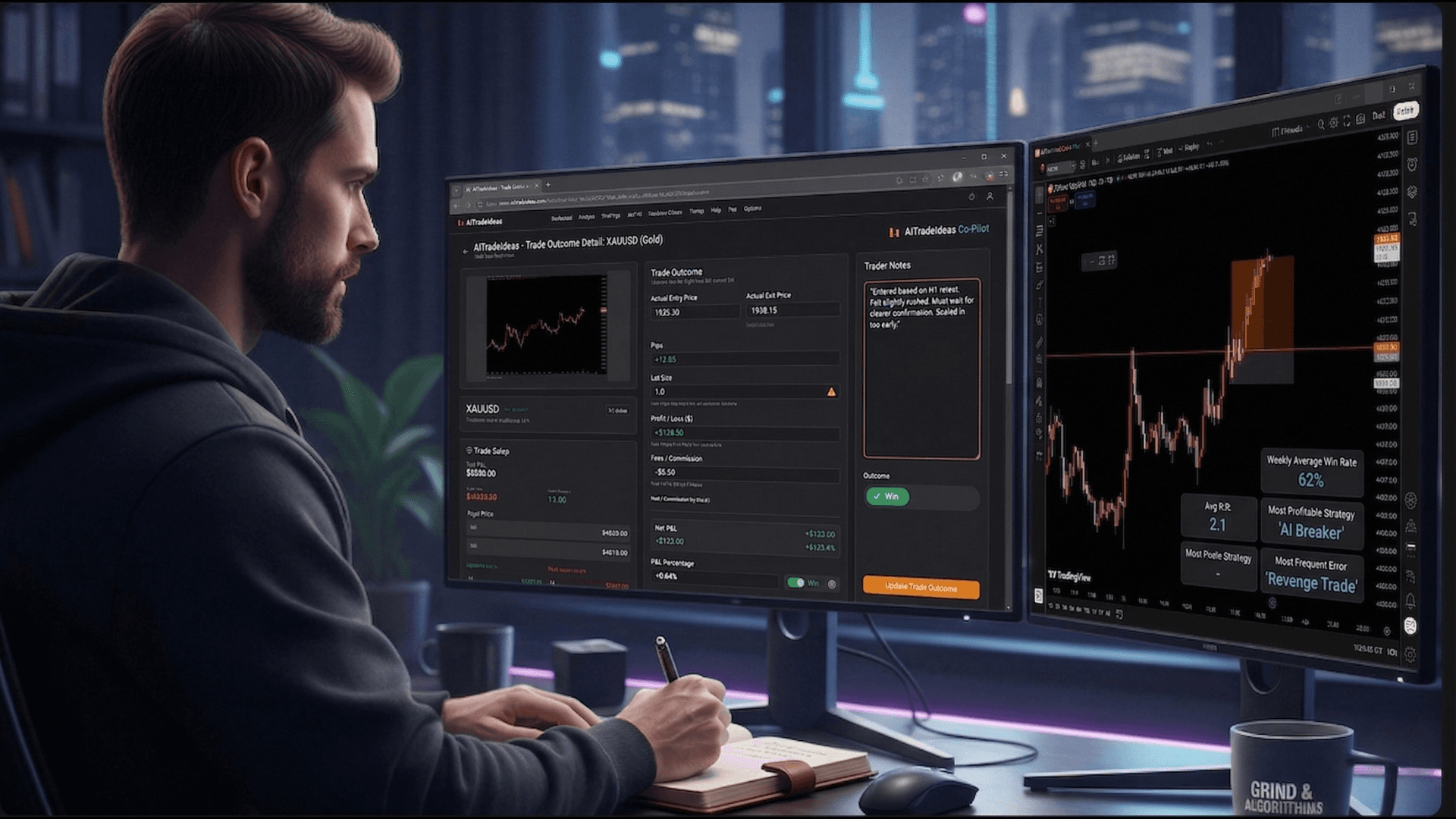
Pattern Recognition: Use the Update/Edit features to attach chart screenshots or notes about your mindset. Seeing the chart setup reinforces pattern recognition far better than text alone.
Conclusion: You Can't Fix What You Don't Track
Professional traders view their journal as an operational tool. It holds you accountable to your own rules and highlights exactly where you drift off course. By treating every trade as a data point, you stop trading on "hope" and start trading on "evidence".