Leveling Up: How to Master Your Trading Workflow with AI
A subscription to an AI Trade Ideas platform isn't just about getting "buy" or "sell" signals; it’s about integrating a digital partner into every stage of your trading lifecycle. Here is how to maximize your subscription to turn raw data into a disciplined trading edge.
Published · Updated
Leveling Up: How to Master Your Trading Workflow with AI
In the modern market, the difference between a struggling trader and a consistently profitable one often comes down to efficiency. You only have so many hours in a day to scan charts, digest news, and review your performance.
A subscription to an AI Trade Ideas platform isn't just about getting "buy" or "sell" signals; it’s about integrating a digital partner into every stage of your trading lifecycle. Here is how to maximize your subscription to turn raw data into a disciplined trading edge.
1. High-Probability Trade Setups
Most traders fail because they "force" trades when the market is quiet. AI eliminates this by acting as an always-on scanner.
The Workflow: Instead of manually flipping through 50 charts, use your AI tool to filter for specific criteria—like a Turtle Soup liquidity raid or a Fibonacci retracement into a golden zone.
The Benefit: You only step in when the AI flags a setup that meets your strict mathematical parameters. This moves you from a "hunter" looking for anything to a "sniper" waiting for the perfect shot.
2. Objective Technical Analysis
Confirmation bias is a trader's worst enemy. If you want to be long, your brain will find reasons to ignore the bearish signals.
The Workflow: Run your manual analysis, then "cross-examine" it with the AI. Ask the AI to identify the key support/resistance levels or the current market regime (trending vs. ranging).
The Benefit: It provides a cold, hard second opinion. If the AI sees a high-probability reversal where you see a trend continuation, it forces you to pause and re-evaluate your risk.
3. Accelerated Trading Education
A subscription is a 24/7 mentor. If you’re a beginner or intermediate trader, you can use the platform to shorten your learning curve.
The Workflow: When the AI suggests a trade idea, don't just take it. Ask why. "Why is this a high-probability setup?" or "What historical pattern is this mimicking?"
The Benefit: You aren't just following signals; you are learning the underlying logic. Over time, you’ll start to recognize these patterns on your own, building "muscle memory" for the charts.
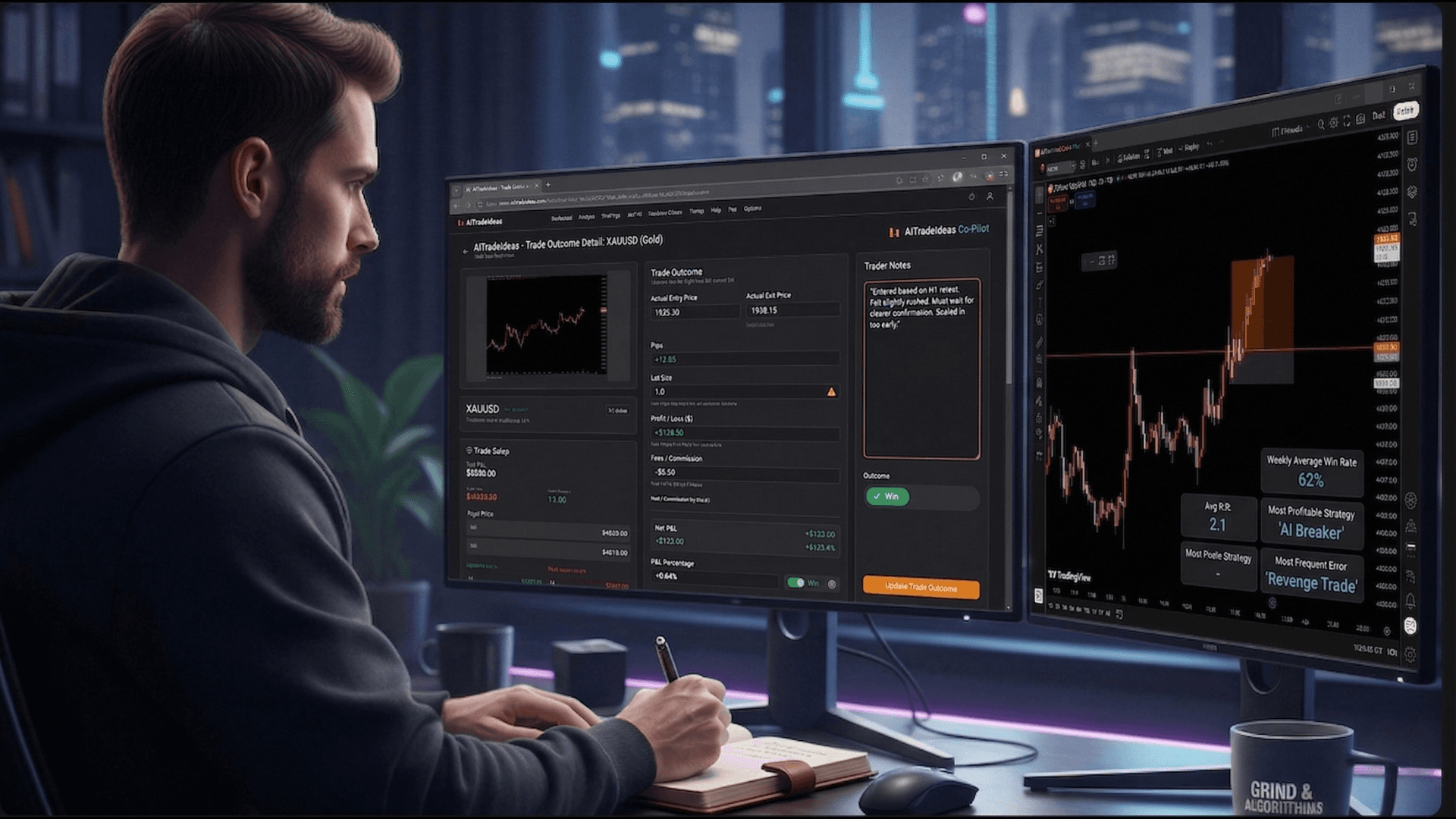
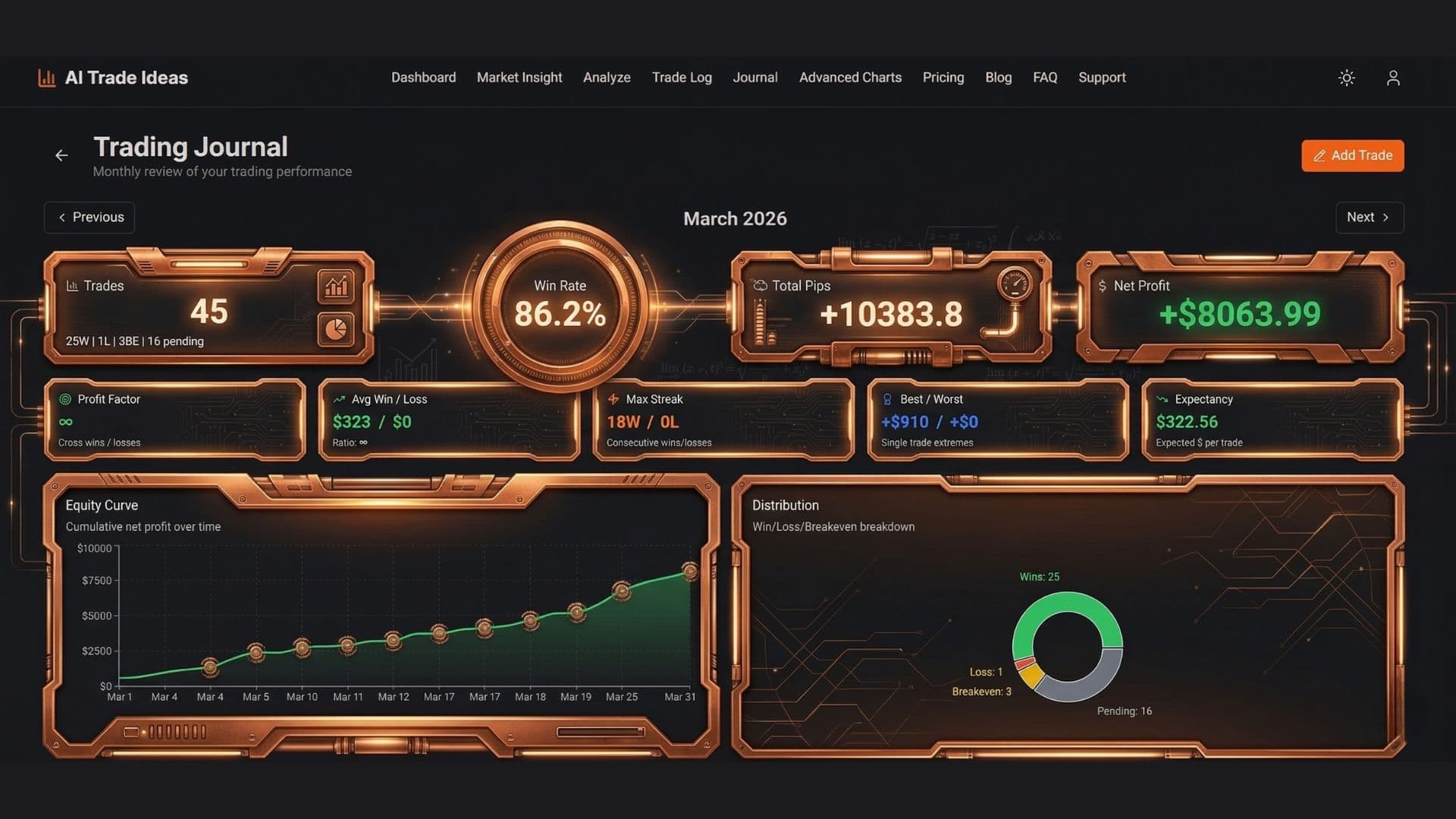
4. The AI-Enhanced Trading Journal
The journal is where the best traders are made, yet it’s the part most people skip because it’s tedious.
The Workflow: Use AI to automate the boring parts. Upload your trade history to identify "leakage." Are you losing money every Tuesday? Do you over-leverage when trading Gold vs. Oil?
The Benefit: AI can perform sentiment analysis on your own notes. It can spot patterns you might miss—like the fact that your "revenge trades" usually happen after a specific type of loss. It turns a simple list of trades into a strategic roadmap for improvement.
5. Real-Time Market Insights
Markets move on a mix of technicals and sentiment. Keeping up with global news, central bank speeches, and economic data is a full-time job.
The Workflow: Use the AI to synthesize the "noise." Ask for a summary of how the latest CPI print or geopolitical event is impacting liquidity in the indices.
The Benefit: You get a macro-view in seconds. This allows you to align your technical setups with the fundamental "tailwinds," significantly increasing your win rate.
Summary: Your Daily AI Routine
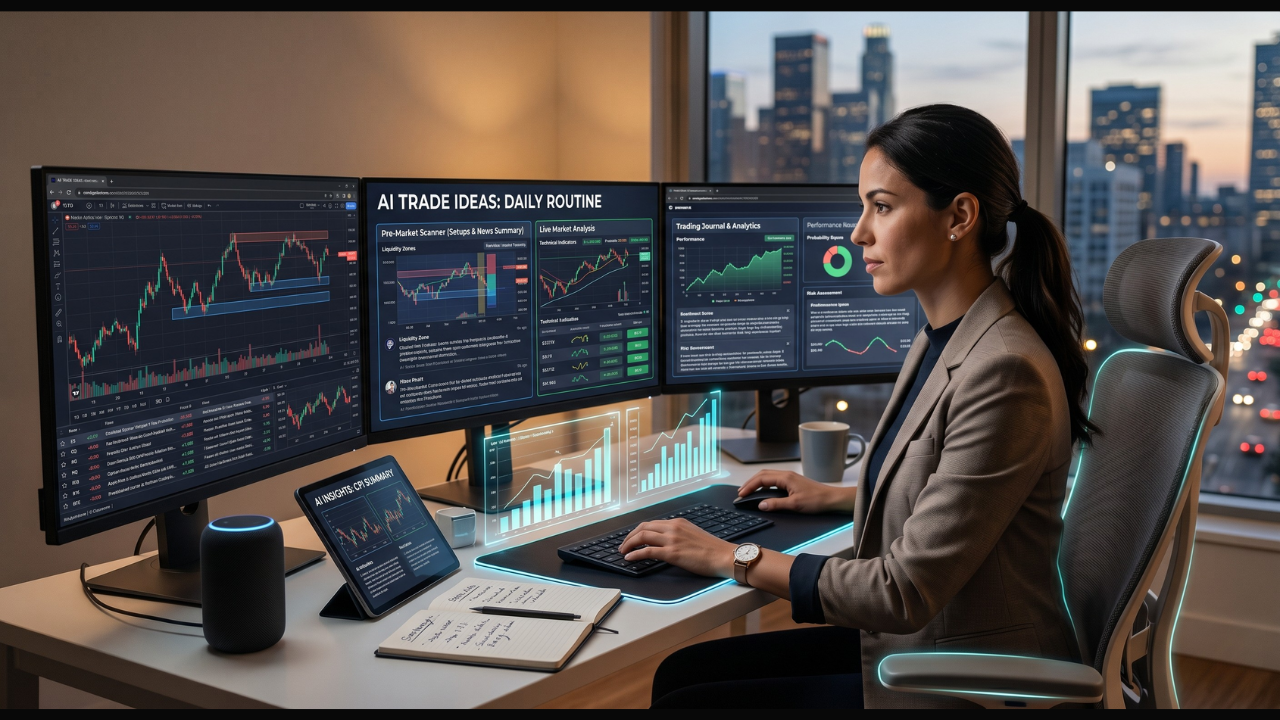
Your Daily AI Trading Routine
To get the most out of your subscription, you should treat AI as a digital co-pilot that assists you from the moment you wake up until the markets close. Here is a high-level workflow to integrate AI into your daily trading habit.
The Pre-Market Prep
Before the opening bell, your goal is to filter out the noise. Start by using the AI to scan the markets for specific high-probability setups, such as liquidity raids or price action hitting key Fibonacci levels. While the AI handles the technical scanning, ask it to synthesize the morning’s news. Instead of reading twenty different articles, let the AI summarize how overnight geopolitical shifts or economic data prints are likely to impact the liquidity and volatility of the assets you trade.
The Active Session
Once you are live in the markets, use the AI as a real-time validator. When you spot a potential entry, cross-reference it with the AI’s analysis to ensure you aren't falling victim to confirmation bias. The AI can provide an objective second opinion on market sentiment and key support or resistance levels. This is also the time to lean on automated alerts; let the AI monitor the charts for your specific "Sniper" criteria so you don't have to stare at candles for hours, which helps reduce decision fatigue.
The Post-Market Review
After the session ends, the focus shifts to growth. Feed your completed trades into the AI-enhanced journal. Instead of just looking at wins and losses, ask the AI to find patterns in your "leakage." It can identify if you are consistently losing money on specific days of the week or if your risk management slips during high-volatility events. This transforms your journal from a static list of numbers into a personalized coaching plan.
Weekend Optimization
Use the market downtime to backtest and educate. Use the AI to run "what-if" scenarios on new strategies or to explain complex technical concepts you encountered during the week. By reviewing the logic behind the AI’s successful trade ideas from the previous days, you build the mental muscle memory needed to spot those same setups faster in the future.
The bottom line: AI doesn't replace the trader; it replaces the grunt work. By utilizing every feature of your subscription—from setups to journaling—you transition from a discretionary guesser to a data-driven professional.